Workplace Narcissism: Traits in Colleagues, Managers & Yourself
The workplace should be a space for growth, collaboration, and professional achievement. However, for many, the office becomes a source of deep anxiety due to a silent underminer: workplace narcissism. This behavior can manifest in many forms, from toxic leadership and disruptive colleagues to subtle self-sabotaging patterns in your own career. Have you ever wondered why certain office dynamics feel so draining? Is it possible you are dealing with a narcissistic personality at work?
Understanding these traits is the first step toward reclaiming your peace of mind and professional focus. Whether you are struggling with a micromanaging boss or recognizing these tendencies in yourself, gaining clarity is essential. To help you navigate these complex emotions, you can take the test to gain immediate insights into behavioral patterns. This guide will help you identify these behaviors and provide practical strategies for a healthier professional life.

Recognizing Narcissistic Traits in Workplace Settings
Identifying workplace narcissism is often difficult. Many narcissistic traits, such as high confidence and ambition, are initially rewarded in corporate environments. However, there is a significant difference between healthy confidence and a pattern of behavior that devalues others to elevate oneself.
Common Red Flags: Narcissistic Behaviors in Managers and Supervisors
A narcissistic boss can make your work life feel like an emotional roller coaster. These individuals often view their subordinates as tools for their own success rather than as team members. Common narcissistic boss traits include a constant need for excessive admiration and a total lack of empathy for their employees' needs.
You might notice that they take full credit for your hard work. They are often quick to shift the blame to you when things go wrong. Many use "gaslighting" techniques, making you doubt your own memory or professional competence. If you feel like you are constantly walking on eggshells around your supervisor, it may be time to gain clarity through an objective assessment of the situation.
Spotting Narcissistic Patterns Among Peers and Colleagues
Dealing with a narcissistic coworker can be just as challenging as having a narcissistic manager. These peers often engage in subtle sabotage to ensure they remain the center of attention. They may "forget" to include you in important emails or spread rumors to undermine your reputation with leadership.
Unlike a healthy competitive colleague, a narcissistic peer feels threatened by your success. They often monopolize conversations in meetings and steer every topic back to their own achievements. Recognizing these patterns early allows you to protect your work. Maintaining your professional boundaries is essential before the environment becomes truly toxic.
Self-Assessment: When Narcissistic Tendencies May Be Affecting Your Own Professional Performance
Self-reflection is a hallmark of professional maturity. Sometimes, the traits we see in others might actually be reflections of our own defense mechanisms. Do you find yourself struggling to accept any form of constructive feedback? Do you feel an intense need to be recognized as "the best" at the expense of team harmony?
Recognizing these tendencies in yourself is not about shame; it is about growth. Many successful professionals have some narcissistic traits. However, when these traits begin to derail your relationships or performance, action is needed. You can start your test today to see where you land on the spectrum and receive a confidential summary of your behavioral patterns.

The Impact of Narcissistic Traits on Workplace Dynamics and Career Progression
The presence of narcissism in an organization acts like a slow-acting poison. It doesn't just hurt individuals; it erodes the very foundation of the company's culture and long-term success.
How Narcissistic Leadership Affects Team Morale and Productivity
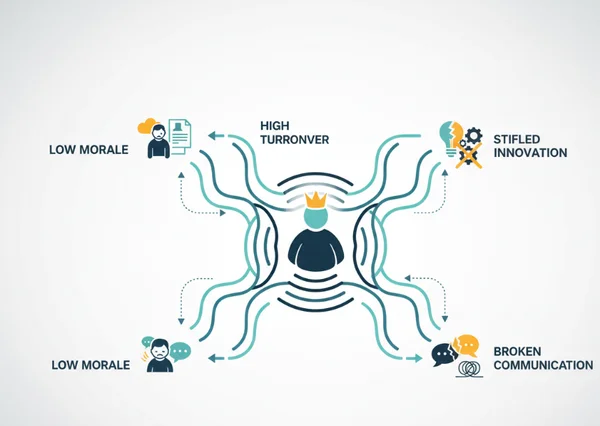
When a leader exhibits narcissistic traits, team morale usually plummet. Because these leaders prioritize their own ego over the mission, employees often feel undervalued and ignored. This leads to a "silo" effect, where communication breaks down. People are often afraid to share ideas that might challenge the leader's fragile ego.
Productivity also suffers because the focus shifts from "doing the work" to "pleasing the boss." Instead of innovating, the team spends its energy managing the manager's emotions. This environment creates high turnover rates. Talented employees quickly realize their contributions will never be truly recognized.
Career Consequences: When Narcissism Derails Professional Development
The career impact of narcissistic behavior is significant for both the narcissist and those around them. For the victim, growth may be stunted because a narcissistic supervisor refuses to provide mentorship. They may even block promotion opportunities that feel like a "threat" to their own position.
For the individual with narcissistic traits, their career may eventually hit a "glass ceiling." While their drive might get them to mid-management, they may struggle to build genuine relationships. This inability to foster teamwork often prevents them from reaching executive levels where emotional intelligence is mandatory. Understanding these dynamics is vital for anyone looking to see your results and improve their professional trajectory.
The Psychological Toll: Stress, Burnout, and Mental Health Impacts
Living in a state of constant vigilance is exhausting. Employees working under or alongside narcissistic individuals often report high levels of stress, chronic anxiety, and eventual burnout. The psychological toll of being undermined can lead to imposter syndrome. You may begin to believe you are incompetent despite your clear achievements.
Mental health is the foundation of career longevity. If your job causes you to lose sleep or feel a sense of dread every Sunday night, evaluate the root cause. Identifying whether the issue is a specific person's narcissistic behavior can help you stop blaming yourself for the toxic environment.
Strategies for Navigating Workplace Relationships with Narcissistic Individuals
You cannot change a narcissistic person, but you can change how you interact with them. Developing a toolkit of professional strategies is the best way to protect your career and your peace.
Setting Boundaries with Narcissistic Colleagues and Managers
Boundaries are your primary defense. In a professional setting, this means being very clear about your role, your hours, and your methods of communication. If a narcissistic manager tries to call you late at night for non-emergencies, you must consistently reinforce your availability hours.
Digital boundaries are also helpful. Keep all communication focused on facts and tasks. Avoid sharing deep personal information, as narcissistic individuals often use personal vulnerabilities as leverage later. By maintaining a polite but firm professional distance, you make yourself a less attractive target for their emotional games.
Communication Techniques That Work with Narcissistic Personalities
One of the most effective methods for dealing with narcissism is the "Grey Rock" technique. This involves making your responses as uninteresting as a grey rock. When a narcissistic colleague tries to bait you into an argument or seeks excessive praise, give short, factual, and neutral answers like "I see" or "That is an interesting perspective."
When communicating with a narcissistic boss, use "we" language to appeal to their desire for group success. However, always follow up verbal conversations with a summary email. This creates a "paper trail" that prevents them from changing the narrative or claiming you said something you didn't.
Protecting Your Work and Recognition from Narcissistic Appropriation
To prevent someone from taking credit for your work, you must increase your visibility. Don't work in a vacuum. Regularly update other stakeholders or upper management on your progress through shared project folders or CC’d emails.
If a colleague attempts to claim your idea in a meeting, practice a calm, assertive "reclamation." You might say, "I'm glad you brought that up; as I mentioned in the proposal I drafted last week, the data really supports that direction." This isn't aggressive; it is simply factual documentation of your contribution. If you're unsure if you're being too passive or too aggressive, try our tool to better understand your own interaction style.
When Narcissistic Patterns Are Recognized in Yourself: Pathways for Professional Growth
It takes immense courage to admit that you might have narcissistic tendencies. If you’ve noticed that your professional relationships are consistently strained, or that you feel a deep-seated need for constant validation, this is an opportunity for a breakthrough.
Understanding the Root of Workplace Narcissistic Tendencies
Most narcissistic behaviors in the workplace are actually defense mechanisms. They often stem from a deep fear of inadequacy or past experiences where one felt they had to be "perfect" to be valued. In the high-pressure world of business, these traits can become amplified as a way to survive competition.
Understanding the "why" behind your behavior allows you to address the cause rather than just the symptoms. It’s not about being a "bad person." It is about unlearning habits that no longer serve your professional or personal growth.
Practical Strategies for Developing Healthier Professional Behaviors
The journey toward healthier behavior starts with empathy and active listening. In your next meeting, make it a goal to ask three questions about others' ideas before sharing your own. Practice "generous leadership" by publicly praising a teammate’s contribution without mentioning your own involvement.
Another powerful step is to seek out an AI personalized report after taking an initial test. These reports provide deep context, helping you identify specific professional scenarios where your traits might be causing friction. They offer actionable advice on how to transform a need for control into a talent for healthy delegation.
Seeking Professional Support: When and How to Address Narcissistic Patterns
Sometimes, self-help isn't enough. If you find that narcissistic patterns are causing you to lose jobs or lose important professional relationships, seeking a therapist or executive coach can be life-changing. These professionals can provide a safe, confidential space to work through the underlying triggers.
Remember, the goal isn't to change your personality entirely. It is to balance your drive and confidence with the empathy and collaboration required for long-term career success. Taking the first step by using the test can give you the data you need to start that conversation with a professional.

Your Next Steps Toward a Healthier Workplace Experience
Workplace narcissism is a complex challenge, but it is not one you have to face without tools. By recognizing the red flags in managers and peers, you can implement boundaries that protect your mental health and your career progression. If you’ve recognized these traits within yourself, remember that awareness is the most important part of the journey toward becoming a more effective and respected professional.
Understanding workplace dynamics requires clarity. Whether you're trying to navigate a challenging relationship with a supervisor or reflect on your own professional behavior patterns, objective insights can provide valuable direction. Take the first step toward healthier workplace dynamics by taking our free assessment today. This confidential tool can provide immediate insights into behavioral patterns that may be affecting your professional experience.
Frequently Asked Questions About Narcissism in the Workplace
Can a narcissistic boss change their behavior?
While people can change, individuals with strong narcissistic traits rarely do so without significant self-motivation and professional intervention. In a workplace context, a narcissistic boss is unlikely to change simply because you ask them to. Your best approach is usually to manage your own reactions and set firm boundaries rather than waiting for them to transform.
How can I tell if my workplace issues are due to narcissism versus poor management?
Poor management is often a lack of skill—such as being disorganized or having poor communication. Narcissism, however, is a pattern of behavior characterized by a lack of empathy and a need for ego-inflation. If your boss is disorganized but cares about your well-being, it's poor management. If they intentionally undermine you to look better, it may be narcissism. You can take the test to help distinguish these patterns.
What should I do if I'm displaying narcissistic traits at work?
First, don't panic. Many high-achievers have these traits. The best step is to increase your self-awareness. Use tools like the online narcissism test to identify your specific triggers. Once you know your patterns, you can consciously practice new behaviors, like active listening and giving credit to others.
Is it better to confront a narcissistic coworker or avoid them?
Direct confrontation with a narcissist often leads to "narcissistic rage" or increased sabotage. It is usually more effective to use the "Grey Rock" method—remaining neutral and uninteresting—and to maintain a professional distance. Document all interactions and focus on your own performance rather than trying to "fix" or expose them.