Workplace Narcissism: Signs, Coping Strategies & When to Take a Test
Have you ever left a meeting feeling confused, drained, or unfairly criticized? Do you find yourself constantly walking on eggshells around a specific boss or colleague? Many professionals experience toxic workplace dynamics but struggle to name the underlying cause. These challenging interactions often stem from narcissistic behaviors, which can quietly sabotage team morale and individual careers.
Understanding these behaviors is the first step toward reclaiming your professional peace. This guide will walk you through the key signs of workplace narcissism, its impact on your well-being, and practical strategies to cope. It will also explore how gaining self-insight through a simple assessment can empower you to navigate these complex situations. If you're seeking clarity, our free online narcissism test can offer valuable perspective.

Recognizing Workplace Narcissism: Key Red Flags
Identifying narcissistic behavior in a professional setting can be tricky. It's often masked as ambition or strong leadership. However, certain patterns consistently emerge that disrupt productivity and create a toxic atmosphere. Learning to spot these red flags is crucial for protecting your mental health and career.
Common Traits of Narcissistic Bosses and Colleagues
A narcissistic boss or coworker often displays distinct behaviors centered around an inflated sense of self-importance. They may consistently take credit for others' work, demand excessive admiration from their team, and show a striking lack of empathy for their colleagues' challenges or workloads.
Here are some common traits to watch for:
-
A Grandiose Sense of Self-Importance: They often exaggerate their achievements and expect to be recognized as superior without the accomplishments to back it up.
-
A Constant Need for Admiration: They thrive on praise and can become visibly upset or dismissive when they don't receive it.
-
A Lack of Empathy: They are often unwilling or unable to recognize the needs and feelings of others. A team member's personal emergency might be seen as an inconvenience to them.
-
Exploitative Behavior: They may take advantage of others to achieve their own ends, whether it's stealing an idea or offloading their work onto a junior colleague.
-
A Strong Sense of Entitlement: They have unreasonable expectations of especially favorable treatment or automatic compliance with their demands.
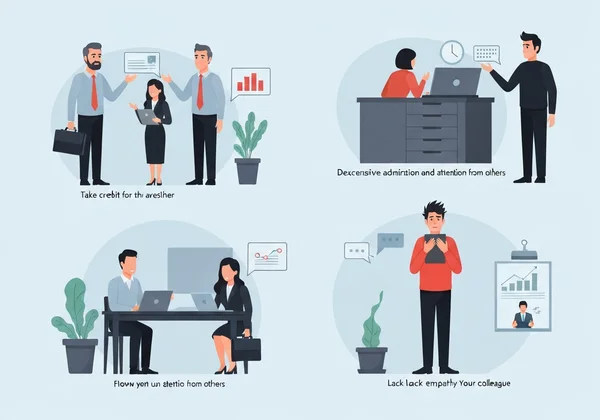
Subtle vs. Overt Narcissistic Behaviors in Professional Settings
Narcissism isn't always loud and arrogant. It can also be subtle and manipulative, making it even harder to identify. Overt narcissism is easier to spot—think of the boss who openly belittles employees in meetings or constantly boasts about their own success. This behavior is disruptive and obviously unprofessional.
Covert, or vulnerable, narcissism is more hidden. A covertly narcissistic colleague might present themselves as a victim, using passive-aggressive comments to undermine you. They might give you the silent treatment after a disagreement or use "gaslighting" tactics to make you doubt your own perceptions and sanity. For instance, they might deny saying something you clearly remember, leaving you feeling confused and insecure. Both forms are damaging, but recognizing the subtle signs is key to understanding the full scope of a toxic work environment.
Psychological Impact of Workplace Narcissism on Your Career
Working with or for a person with strong narcissistic traits is more than just annoying; it can have a profound and negative impact on your mental health and career trajectory. The constant stress, manipulation, and lack of recognition can lead to serious psychological strain and professional stagnation.
Career Sabotage & Credit-Stealing Patterns
One of the most damaging aspects of workplace narcissism is the tendency for individuals to sabotage the careers of those around them. This can be subtle or overt. A narcissistic colleague might "forget" to include you in a crucial email chain, provide you with incorrect information to make you look incompetent, or spread rumors to damage your reputation.
Credit-stealing is another hallmark. You might spend weeks on a project only to have your narcissistic boss present it as their own in a leadership meeting, giving you little or no credit. Over time, this pattern can prevent you from getting promotions, raises, and the recognition you deserve, effectively stalling your career growth.
Emotional Exhaustion and Burnout from Toxic Work Environments
The daily emotional toll of dealing with a narcissistic individual is immense. The constant need to be on guard, the anxiety of anticipating their next move, and the frustration of your efforts being ignored or stolen can all lead to severe emotional exhaustion. This is a direct path to burnout.
Symptoms often include chronic stress, a loss of passion for your work, feelings of cynicism, and a decline in your overall job performance. Your confidence may plummet, and you might start to internalize the blame, wondering if you are the problem. This emotional drain doesn't just stay at the office; it can spill over into your personal life, affecting your relationships and overall happiness. If you are feeling this way, gaining personal insight can be a powerful first step toward change. For a confidential way to reflect on your own behaviors and feelings, you can start your test today.

Effective Coping Strategies for Dealing with Narcissistic Coworkers
While you cannot change a narcissistic colleague's behavior, you can control how you respond to it. Implementing effective coping strategies is essential for protecting your professional boundaries and mental well-being. The goal is to minimize their negative impact on you.
Setting Professional Boundaries That Actually Work
Setting firm, clear boundaries is your most powerful tool. Narcissistic individuals often push limits to see what they can get away with. It's up to you to define and enforce your own.
- Be Direct and Concise: Avoid long explanations or emotional appeals. State your boundary clearly. For example, if a coworker is constantly interrupting you, say: "I need to finish this thought."
- Limit Personal Disclosures: Avoid sharing personal vulnerabilities or insecurities, as they can be used against you. Keep conversations focused on work-related topics.
- Control Your Schedule: Don't allow a narcissistic colleague to monopolize your time with non-urgent "emergencies." Politely but firmly protect your schedule. You can say, "I can look at this at 2 PM, but I need to focus on my current task right now."
Communication Techniques to Diffuse Narcissistic Behavior
How you communicate can either escalate or de-escalate a tense situation. Using specific techniques can help you navigate conversations more effectively and protect yourself from manipulation. One popular method is the "Gray Rock" technique, where you become as uninteresting as a gray rock. Respond with short, factual, and unemotional answers. This removes the emotional reaction they often seek.
Another technique is to focus on facts and documentation. After a verbal conversation where a task is assigned, follow up with an email summarizing what was discussed. For example: "As per our conversation, I will complete X by Y date." This creates a paper trail that makes it harder for them to deny reality or steal credit later on.
When a Narcissism Test Can Provide Workplace Clarity
Dealing with difficult personalities at work can leave you questioning everything—including yourself. Am I overreacting, or is this behavior truly toxic? In these moments of uncertainty, an objective tool can provide much-needed clarity. A narcissism test is not for diagnosing a colleague, but for understanding the patterns you're observing and, importantly, reflecting on your own responses and behaviors.
Using Our Free Narcissism Test to Understand Your Own Workplace Behaviors
A toxic environment can sometimes bring out the worst in us. The constant stress and conflict might cause you to develop defensive or reactive behaviors that don't align with your true self. Taking a moment for self-reflection can be incredibly empowering.
Our confidential narcissism test is designed to help you explore your own traits and behavioral patterns. By answering a series of thoughtful questions, you can gain insight into how you interact with others, handle conflict, and see yourself. This isn't about labeling yourself; it's about gaining self-awareness. Understanding your own tendencies can help you manage your reactions to a difficult colleague more effectively. To begin your journey of self-discovery, try our free tool.

Evaluating Whether a Colleague's Patterns Warrant Professional Intervention
While you can't force a colleague to take a test, understanding the spectrum of narcissistic traits can help you gauge the severity of the situation. If a coworker's behavior consistently involves bullying, harassment, or sabotaging company projects, it goes beyond a simple personality clash. These are serious issues that may warrant professional intervention from Human Resources.
Documenting specific incidents—with dates, times, and factual descriptions of the behavior—is crucial. An objective understanding of narcissistic patterns, informed by resources like this article and self-assessment tools, can give you the confidence to frame your concerns to HR in a professional, fact-based manner.
Your Next Steps Toward a Healthier Workplace Experience
Navigating workplace narcissism is a significant challenge, but you are not powerless. By learning to recognize the signs, understanding the psychological impact, and implementing firm boundaries, you can protect your career and your well-being. Remember, your primary focus should be on what you can control: your reactions, your boundaries, and your own self-awareness.
If you are questioning your work dynamics or your own responses to stress, taking a step back to reflect is a sign of strength. Gaining clarity is the first move toward creating a healthier professional life.
Want to better understand your own behavioral patterns? Our free test can provide the clarity you're seeking. Begin your journey to self-awareness today with our confidential Start your free test.
Frequently Asked Questions About Narcissism in the Workplace
How can I tell if my boss is narcissistic?
Look for a consistent pattern of behaviors, not just a single bad day. Key signs of a narcissistic boss include a strong sense of entitlement, a lack of empathy for the team, taking credit for others' successes, and an inability to handle even constructive criticism. They often manage through intimidation or charm, depending on what serves them best.
What should I do if I work with a narcissistic colleague?
Focus on setting professional boundaries and managing your interactions. Keep communication factual and documented, avoid sharing personal information, and don't engage in emotional arguments. If their behavior constitutes harassment or sabotage, document the incidents and report them to HR according to your company's policy.
Can a narcissism test help improve my work relationships?
A narcissism test is primarily a tool for self-reflection. By understanding your own tendencies and reactions, you can learn to manage difficult interactions more effectively. It provides you with personal insight, which can help you set better boundaries and not internalize toxic behavior from others. To explore your own traits, you can take our test.
Is there a difference between a difficult boss and a narcissistic one?
Yes. A difficult boss might have high standards or poor communication skills but is generally rooted in reality and may show remorse or a willingness to change. A narcissistic boss's behavior stems from a deep-seated need for admiration and a lack of empathy. Their actions are about serving their own ego, often at the expense of their team and the company.
Disclaimer: This article is for informational purposes only. The test on Narcissismtest.net is an educational tool for self-reflection and is not a substitute for a professional medical or psychological diagnosis. If you are concerned about your mental health or a toxic work environment, please consult a qualified mental health professional or your Human Resources department.