Take a Narcissism Test Without Self-Labeling
Why one bad week can distort a self-test
Many people take a narcissism test after a painful moment. It might be an argument, a breakup, a harsh piece of feedback, or a week where shame is already running high. In that state, the test can start to feel less like reflection and more like a verdict.
That is usually the wrong frame. A self-test can help you slow down, notice patterns, and put confusing behaviors into words. It cannot tell you your full worth as a person, and it should not be used to punish yourself after one difficult stretch.
That is why the self-reflection test is most useful when you approach it as a starting point. The goal is not to prove that you are "good" or "bad." The goal is to answer honestly enough that the result reflects patterns instead of panic. The site's basic questionnaire takes about 5-10 minutes and uses about 20 items, which is useful for reflection but still much narrower than a full clinical evaluation.
Disclaimer: The information and assessments provided are for educational purposes only and should not replace professional medical advice, diagnosis, or treatment.

What a narcissism test can and cannot tell you
Long-term patterns matter more than one recent argument
The strongest reason to slow down is simple: personality patterns are not supposed to describe one isolated moment. The MedlinePlus overview of personality disorders says these conditions involve long-term patterns of thoughts and behaviors. Those patterns are unhealthy, inflexible, and serious enough to affect relationships, work, social life, and everyday stress handling. That is a much broader picture than one bad conversation.
So when you answer a self-test, try not to anchor every response to the worst thing you did last Tuesday. Ask yourself what tends to happen over time. What do people close to you see repeatedly? What shows up in more than one setting?
This matters because almost anyone can sound selfish, defensive, or attention-seeking during stress. A more honest answer comes from repeated behavior, not from a single spike of guilt or anger. That is one reason the confidential screening tool should be used for reflection, not self-condemnation.
Why an online score is not a clinical diagnosis
An online score can be informative without being diagnostic. The same MedlinePlus personality-disorder guidance says diagnosis is made by a mental health care provider. That provider considers symptoms, life experiences, and family medical history, and may also use a medical exam to rule out other causes. That process is much wider than a short online questionnaire.
The site makes the same boundary clear. It does not offer clinical diagnosis, and it does not claim to replace therapy or formal assessment. That limit protects the reader as much as it protects the site.
In practice, this means you should read the score as a clue, not a sentence. It may highlight themes worth thinking about. It does not settle whether you have narcissistic personality disorder, and it does not tell you everything important about how you function in relationships.
How to answer a self-test more honestly
Think across work, family, friendship, and conflict settings
Before you click through the questions, widen the frame. The NCBI StatPearls review of narcissistic personality disorder describes it as a pervasive pattern that lasts over time and across a variety of situations or social contexts. That is useful test-taking advice even if you are nowhere near a diagnosis question.
In other words, do not answer from one role only. Think about how you react with friends, family, partners, coworkers, and during conflict. If you feel highly confident at work but deeply reactive in intimate relationships, that difference matters. If you are generous in calm settings but defensive under criticism, that pattern matters too.
This wider view makes the result more honest. It also keeps you from turning one recent emotional state into a whole identity. If you want a clearer snapshot, the reflective questionnaire is more useful when you mentally review several settings before you begin.
Write down patterns before you read the result
One simple habit can improve the whole process: write down a few examples before you look at the score. Keep it short. Write down 2 repeated situations where you seek admiration, react strongly to criticism, struggle with empathy, or feel misunderstood. Then add 2 situations that do not fit the same pattern.
That second part matters. A balanced note keeps you from reading the result like a prosecutor building a case. It reminds you that people are messy, mixed, and more than one label.
This is also a good way to notice context. Were the examples spread across months, or did they all happen in one crisis week? Did they show up in different relationships, or only in one painful situation? By the time you see the summary, you will have a more grounded way to interpret it.

When to pause the test and get outside support
Shame spirals, panic, and relationship emergencies
Sometimes the best test-taking choice is to stop. If you are in the middle of a relationship emergency, a severe shame spiral, or a panic-heavy night of self-accusation, a self-test may not be the most helpful next step.
That does not mean the questions are bad. It means your current state may make every answer feel absolute. In that moment, even a neutral item can sound like proof that something is deeply wrong with you. That is not a good setup for reflection.
Seek professional help and talk to a mental health professional if distress is severe or persistent. Do the same if work, school, or close relationships are being affected. If you feel unsafe, fear you may harm yourself or someone else, or the situation is urgent, seek immediate help and contact emergency services or a local crisis resource.
Better next steps after a difficult result
If the result hits hard, slow the process down before you do anything else. Close the tab for a few minutes. Re-read your written examples. Ask whether the score matches a long-term pattern or only your current emotional state.
Then choose one calmer next step. You might bring the result to therapy, discuss it with a qualified mental health professional, or use it as a starting point for journaling about recurring behavior in specific relationships. If you use the site's deeper AI report, treat it as a reflective aid, not as medical advice or a diagnosis.
That is also a good moment to avoid using the result as a weapon. Do not send it to other people as proof about yourself, and do not start diagnosing someone else because your own result scared you. A difficult score should lead to slower thinking, not harsher labeling.
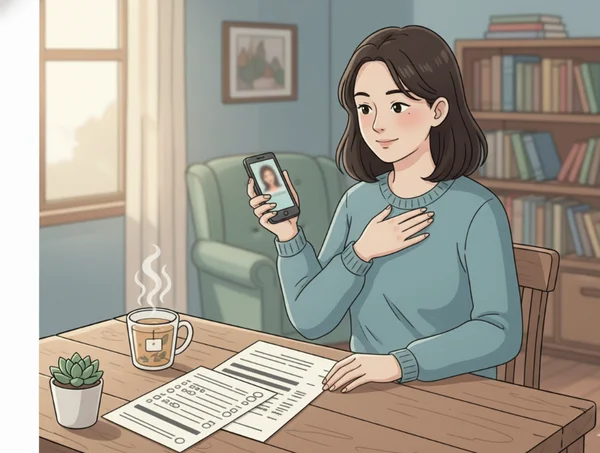
What to do next after your first result
The healthiest next step is usually small. Keep the result in context, compare it with your written examples, and ask what pattern deserves more honest attention. That might be defensiveness under criticism, a need for admiration, trouble taking responsibility, or something else entirely.
Then focus on one question instead of one label: what do I want to understand better about my behavior over time? That question keeps the process reflective. It also makes the result more useful than a simple "yes or no" identity test.
Used that way, the result summary tool can open a more honest conversation with yourself. It should not trap you in a name you cannot move beyond. The test works best when it gives you language for reflection, clearer reasons to seek support when needed, and a calmer starting point for real change.