Narcissism Test: What's Mistaken? BPD, Low Self-Esteem & Confidence
In today's world, the word "narcissist" is used frequently, often to describe anyone who seems overly self-absorbed or confident. But what does it truly mean? The line between genuine narcissistic traits and other complex human behaviors can be incredibly blurry. This confusion leads to misunderstanding, mislabeling, and missed opportunities for personal growth.
Have you ever found yourself wondering if a behavior—in yourself or someone else—is narcissism, or something else entirely? You're not alone. Many people struggle to differentiate narcissistic patterns from conditions like Borderline Personality Disorder (BPD), simple low self-esteem, or even healthy confidence. Gaining clarity is the first step toward better understanding and healthier relationships. This guide will help you navigate these complex distinctions.
For those seeking a starting point in their self-exploration journey, an online tool can provide valuable initial insights. A well-designed narcissism test can help you reflect on your own patterns in a private, non-judgmental way.
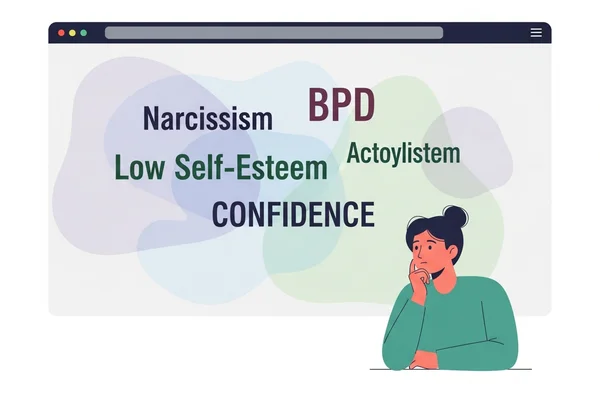
Why Is Narcissism So Often Misunderstood?
The term "narcissism" has become a catch-all in popular culture, which often leads to confusion. Many different personality traits and mental health conditions can share similar outward signs, such as emotional outbursts, a need for validation, or a focus on self. Without looking deeper, it's easy to miss the full picture.
The Overlap of Behavioral Traits: Causes of Confusion
The primary reason for misunderstanding is that human behaviors are complex. Constantly seeking reassurance? It might signal a narcissist's need for admiration. Or it could stem from anxiety and low self-esteem. Intense emotional reactions might point to BPD. They could also be the defensive rage common in vulnerable narcissism.
This overlap means that looking at a single behavior in isolation is rarely helpful. To truly understand what's going on, we need to look at the underlying motivations, the consistency of the patterns, and the impact on others.
The Importance of Accurate Self-Reflection & Identification
Why does it matter if we get it right? Because accurate understanding leads to effective solutions. Mistaking healthy confidence for narcissism can cause you to needlessly doubt yourself. Confusing BPD with narcissism leads to ineffective communication, as the fears driving the behaviors are completely different.
When you can accurately identify the patterns you're dealing with, you are better equipped to set healthy boundaries, improve your relationships, and support your own personal growth. It moves you from a place of confusion to a position of clarity and empowerment.
Narcissism vs. Borderline Personality Disorder (BPD): Key Differences
One of the most common points of confusion is between narcissistic traits and Borderline Personality Disorder (BPD). Both can involve intense emotions and relationship difficulties, but what drives them is fundamentally different.
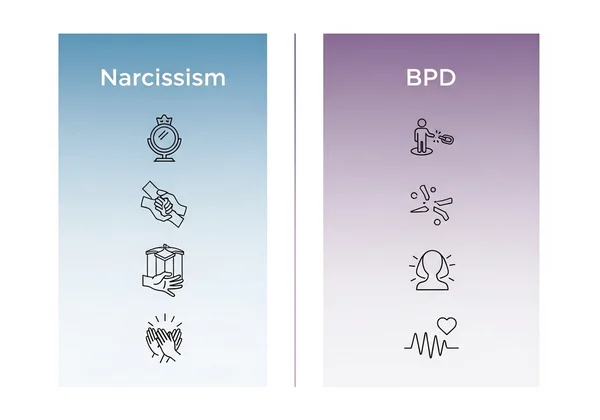
Underlying Motivations: Manipulation vs. Fear of Abandonment
So, what's the real distinction? It comes down to motivation. For individuals with strong narcissistic traits, problematic behaviors are often driven by a need to protect a fragile ego. They seek admiration to feel superior and may manipulate others to maintain their sense of entitlement and control. Their inner world is organized around preserving their inflated self-image.
In contrast, for someone with BPD, behaviors are typically driven by an intense and overwhelming fear of abandonment. Their sense of self can be unstable, and they may frantically try to avoid real or perceived rejection. Their actions might look manipulative. But the goal is connection—not superiority. They fear being left alone.
Emotional Regulation and Stability: A Contrasting Picture
Emotional experience also differs significantly. While individuals with narcissistic traits may display anger or rage when their ego is challenged (known as narcissistic injury), their mood is often relatively stable as long as they are receiving admiration.
A hallmark of BPD, however, is emotional dysregulation and rapid mood swings. Their emotions can shift dramatically in a short period, often triggered by interpersonal events. This internal emotional storm is a central feature of BPD, whereas for narcissism, the emotional volatility is more of a reaction to external threats to their self-esteem.
Is It Low Self-Esteem or Narcissism? Clarifying the Difference
It may seem counterintuitive, but grandiosity and low self-worth can sometimes look alike on the surface. Both can lead a person to constantly seek validation from others. However, the internal experience and the way they interact with the world are vastly different.
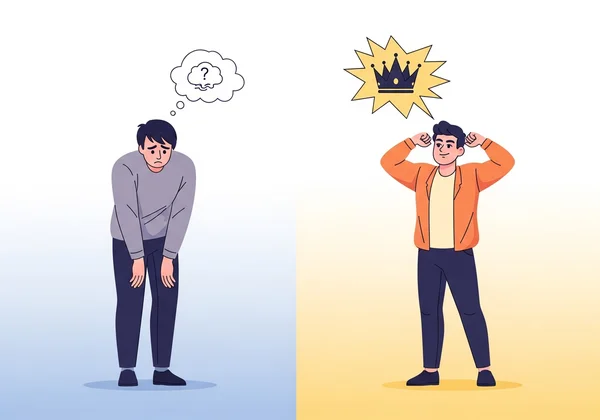
Surface Presentation vs. Inner World: The True Drivers
Someone with strong narcissistic tendencies often projects an image of superiority, entitlement, and grandiosity. This outward confidence is a defense mechanism—a mask to hide a deeply fragile and insecure inner self. They are dependent on external validation to believe in their own inflated self-image.
On the other hand, a person with low self-esteem typically does not project superiority. Their self-doubt is often visible, and they tend to be self-critical both internally and externally. While they also seek validation, it comes from a place of feeling "not good enough" rather than a belief that they are "better than everyone else." If you're struggling to understand your own patterns, a free narcissism test can offer a structured way to reflect.
Seeking Validation: Internal Security vs. External Reliance
Think of it this way: a person with low self-esteem is looking for validation to feel equal or adequate. They hope for reassurance that they are okay. A person with narcissistic traits seeks validation, which they call "narcissistic supply," to feel superior and special. They require admiration to fuel their sense of entitlement. This difference in purpose is the clearest way to tell them apart.
Confidence vs. Narcissism: A Fine Line to Discern
Healthy confidence is a cornerstone of success and well-being. Yet, in a culture that is wary of narcissism, people with genuine self-assurance are sometimes unfairly labeled. Understanding the difference is crucial for both personal development and for fairly assessing others.
Healthy Self-Assurance vs. Inflated Ego and Entitlement
True confidence is rooted in reality. It is built on skills, accomplishments, and a stable sense of self-worth. A confident person can acknowledge their strengths without needing to put others down. They can also accept constructive criticism because their self-esteem isn't brittle.
Narcissistic grandiosity, however, is an inflated ego that is not grounded in reality. It is characterized by a sense of entitlement—a belief that one deserves special treatment and admiration, regardless of their actual achievements. They often react with anger or contempt to any form of criticism, as it shatters their carefully constructed facade.
Empathy and Impact on Others: The Decisive Factor
Perhaps the most important differentiator is empathy. Confident people cheer others' wins. They show empathy and build balanced relationships where everyone feels valued.
A key feature of narcissism, however, is a profound lack of empathy. Individuals with strong narcissistic traits often struggle to recognize or identify with the feelings and needs of others. Relationships are viewed transactionally, as a means to gain admiration and serve their own needs. This is the critical factor that separates healthy self-love from harmful narcissism.
Gaining Clarity: How a Narcissism Test Can Help
Navigating these distinctions can feel overwhelming. Like many people who come to our site, you might be looking for a clear, objective starting point. A well-designed test can provide a private, structured way to explore these complex traits without judgment.

Beyond Labels: Understanding Your Place on the Spectrum
It's important to remember that narcissism exists on a spectrum. Everyone has some traits that could be considered self-focused from time to time. A good online test for narcissism won't give you a simple "yes" or "no" answer. Instead, it helps you understand where you might fall on the spectrum of various narcissistic traits.
This approach moves beyond harsh labels and promotes genuine self-awareness. It can highlight potential areas of challenge and personal strengths, offering a foundation for deeper understanding. The goal isn't to diagnose, but to provide clarity.
When to Seek Professional Guidance: Beyond Self-Assessment
Online tools are excellent for self-reflection, but they are not a substitute for professional diagnosis or therapy. If your traits or relationships are causing you significant distress, it's time to seek help. A qualified mental health professional is your best resource when these patterns affect your work or home life.
Ready for Clearer Insights?
Spotting narcissism versus low self-esteem or BPD isn't just theory—it's your key to stronger relationships and real self-growth. Picture this: Real confidence pairs with empathy. Low self-esteem? That's your inner critic talking. BPD? Fear of being left behind. Recognizing these drivers allows you to respond with greater wisdom and compassion.
Ready to move from confusion to clarity? Taking an objective look at your own patterns is an empowering first step.
Explore your traits in a safe and confidential space. Start your free test today to receive an initial summary and gain valuable insights into your behavioral patterns.
Frequently Asked Questions About Narcissism and Related Traits
How Can I Tell if I'm a Narcissist or Just Confident?
The key difference often lies in empathy and your response to others. Healthy confidence allows you to be proud of your achievements while also supporting and celebrating others. Narcissistic traits often involve a sense of superiority, a need to be the center of attention, and an inability to handle criticism. A confident person values relationships. In contrast, someone with narcissistic traits may see people as tools for validation.
Is There a Reliable Online Test for Narcissism?
Yes, online tools can help you explore narcissistic traits for informational purposes. They aren't a clinical diagnosis. However, a reliable test for narcissism is an excellent starting point for self-reflection. It offers a structured summary of your patterns, helping you see where you might fall on the spectrum.
What Are the Most Common Signs of Narcissistic Behavior?
Some of the most widely recognized signs associated with narcissistic behavior include:
- A strong sense of entitlement and superiority.
- A constant need for admiration and attention from others.
- A significant lack of empathy for the feelings of others.
- A tendency to exploit or manipulate people for personal gain.
- Arrogant behavior and a grandiose view of one's own importance.
Why is it important to differentiate narcissism from other mental health conditions?
Differentiating these conditions is crucial because the path to improvement is different for each. Managing the fear of abandonment in BPD requires different strategies than addressing the fragile ego of narcissism. Accurate identification helps you find the right support. It allows you to set appropriate boundaries and build healthier relationship dynamics.