Narcissism Test & Spectrum: Healthy Ego to NPD Explained
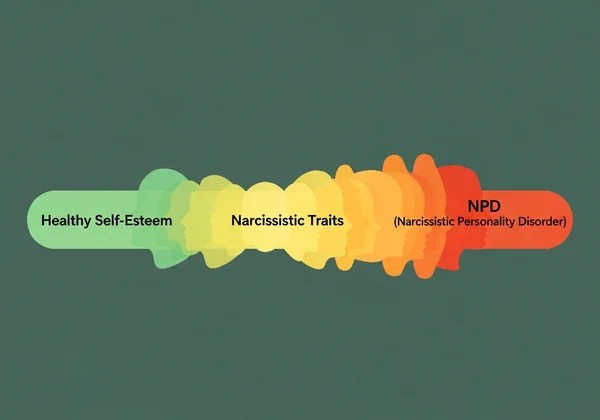
With self-love often celebrated, it's easy to blur the line between healthy self-esteem and the often-misunderstood concept of narcissism. Many people wonder if their traits are just confidence or something more, leading to a desire for self-awareness. The answer isn't a simple yes or no. Narcissism exists on a spectrum, a gradient of behaviors ranging from a healthy ego to a clinical disorder known as Narcissistic Personality Disorder (NPD). Understanding this continuum is the first step toward clarity. For those ready to begin that journey, a free narcissism test can offer valuable initial insights.
What is Narcissism? More Than Just Self-Love
At its heart, narcissism involves an inflated sense of self-importance, a deep need for excessive admiration, and a lack of empathy for others. However, this mask of ultra-confidence often hides a fragile self-esteem. It's a distorted self-perception, not healthy self-love, which is about valuing yourself while respecting others.
The key is to view narcissism as a spectrum, not an on/off switch. Everyone has some narcissistic traits; a healthy dose helps us strive for success. Problems arise when these traits become extreme and rigid, negatively impacting one's life and relationships. Understanding this can help you better explore your traits.
The Healthy End of the Spectrum: Self-Esteem & Confidence
Strong self-esteem is essential for mental well-being. People with healthy confidence believe in their abilities, handle criticism constructively, and don't need constant validation. The key distinction from grandiosity is its foundation in reality and empathy. Healthy self-regard is built on actual achievements and allows for admitting fault. Grandiosity is an inflated, unrealistic sense of superiority.
Confidence can cross the line into arrogance when a need for attention, an inability to handle criticism, and a disregard for others' feelings become consistent. If you're curious about your own patterns, an online test for narcissism can be a starting point for reflection.

Recognizing Narcissistic Traits & Behaviors
As we move along the spectrum, we encounter more pronounced narcissistic traits. These behaviors are not just isolated incidents but consistent patterns that disrupt relationships and cause distress. Recognizing them is the first step toward understanding and managing their impact.
Common Traits: Entitlement, Lack of Empathy, and Grandiosity
Three classic traits mark pronounced narcissism. Entitlement is the unreasonable expectation of favorable treatment. A lack of empathy is the inability to recognize or identify with others' feelings. Grandiosity is an unrealistic sense of superiority. Together, these traits often lead to manipulative behaviors. A narcissism personality test can help identify these patterns.
The Covert Narcissist: Hidden Vulnerability
Not all narcissism is loud. The covert (or vulnerable) narcissist hides their grandiosity behind a facade of victimhood, anxiety, or depression. While still feeling entitled and lacking empathy, they express it differently—through passive aggression, holding grudges, extreme sensitivity to criticism, and a belief that their suffering is unique and misunderstood.
Narcissistic Personality Disorder (NPD): The Clinical Diagnosis
At the far end of the spectrum lies Narcissistic Personality Disorder (NPD), a formal mental health diagnosis. It's important to stress that having narcissistic traits does not automatically mean someone has NPD. A diagnosis can only be made by a qualified mental health professional. The primary goal of a tool like the narcissism spectrum test is self-reflection, not diagnosis.
DSM-5 Criteria for NPD
The Diagnostic and Statistical Manual of Mental Disorders (DSM-5) requires a pervasive pattern of grandiosity, a need for admiration, and a lack of empathy for an NPD diagnosis. An individual must show at least five of nine specific traits, including fantasies of unlimited success, a belief in their own specialness, a sense of entitlement, and arrogant behaviors.
The Impact of NPD
Living with NPD is challenging, often co-occurring with depression and substance abuse. The impact on relationships can be devastating, leading to emotional abuse and manipulation due to the inability to empathize and the need for control.
How Do Narcissistic Tendencies Develop?
There's no single cause for strong narcissistic traits or NPD. Research suggests a complex interplay of genetics, environment, and early life experiences. Genetics may create a predisposition, but environmental factors are highly significant. This can include excessive praise untied to achievement, or conversely, childhood abuse, neglect, or trauma. Narcissistic defenses may develop as a coping mechanism to shield a vulnerable self that feels unseen or unloved.
Your Path to Clarity: Navigating the Narcissism Spectrum
Recognizing narcissism as a spectrum, rather than a rigid label, provides powerful insight. From healthy self-esteem to the complexities of NPD, understanding these varying traits empowers you to build healthier self-perception and navigate relationships with wisdom and compassion.
This knowledge is not about judgment; it's about clarity. If you've recognized patterns in yourself or others that concern you, the next step is gentle, honest self-exploration. To gain personalized insights into your own tendencies, we invite you to take the test now on our homepage. It's a confidential, insightful first step on your path to greater self-awareness.

Frequently Asked Questions About the Narcissism Spectrum
How can I tell if I'm a narcissist or just confident?
Confidence is rooted in reality and balanced with humility and empathy. You can celebrate your strengths while acknowledging weaknesses. Narcissistic traits, however, involve an inflated sense of self that is fragile, requires constant validation, and is often accompanied by a disregard for others' feelings.
What are the key signs of a narcissistic personality disorder (NPD)?
The key signs, as outlined by the DSM-5, include a pervasive pattern of grandiosity, a constant need for admiration, and a profound lack of empathy. Other signs are a sense of entitlement, exploitative behavior, arrogance, and envy of others. A formal diagnosis must be made by a professional.
Do people with narcissistic traits know they are narcissists?
This varies greatly. Some individuals may have a degree of self-awareness, especially if their behaviors have led to negative consequences like failed relationships. However, many lack insight because the core narcissistic defenses protect them from self-reflection that might feel shameful or threatening.
Is there a reliable online test for narcissism?
Online tests, like the one offered at Narcissismtest.net, can be reliable tools for self-reflection and education. They are designed to help you identify potential traits and patterns based on established psychological inventories. However, they are not a substitute for a clinical diagnosis from a mental health professional.
What behaviors can be mistaken for narcissism?
Sometimes, behaviors stemming from other conditions like social anxiety, autism spectrum disorder, or trauma (C-PTSD) can be mistaken for narcissism. For example, someone with social anxiety might dominate a conversation out of nervousness, not grandiosity. It's crucial to consider the underlying motivation behind a behavior.