Narcissism Test: How Social Media Reveals Digital Narcissism
Scrolling through social media today, it's hard not to notice the line between authentic sharing and something more complex. When does self-expression cross into self-obsession? How does our behavior on social media reflect our inner psychology? Social media platforms can act like a digital mirror, showing us parts of our personality we might not otherwise notice. As we dive into the connection between our online behaviors and narcissistic traits, you'll discover patterns worth recognizing—in yourself and others.
For many, this exploration begins with a simple question. Understanding your digital footprint is the first step toward greater self-awareness. If you're curious about your own behavioral patterns, a confidential and insightful tool can provide clarity. You can start this journey of self-discovery by taking a free narcissism test designed to offer initial insights into your tendencies.
Narcissism Test Results: Identifying Narcissistic Patterns in Social Media
Social media has become a primary stage for our lives, but it can also amplify certain behaviors. Identifying the signs of social media narcissism isn't about judgment; it's about awareness. These patterns often revolve around a deep need for admiration and an unstable sense of self-worth that becomes tied to online engagement. Let's look at some common ways these traits appear online.
The Validation Economy: Likes, Comments, and Self-Worth
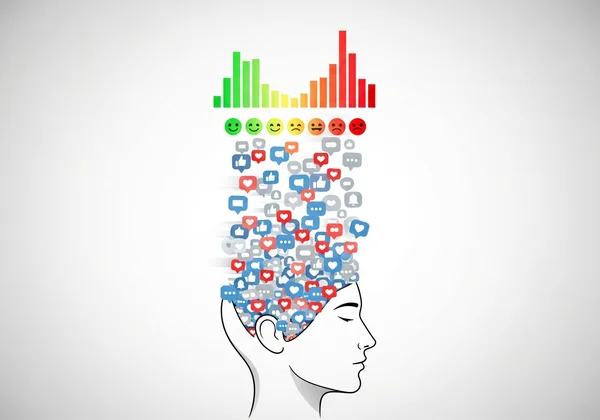
In the digital world, attention is a currency. For some, likes, shares, and comments are more than just casual interactions; they are a measure of self-worth. This is the "validation economy." Someone with narcissistic tendencies might feel intense satisfaction from a viral post but experience significant distress or anger when their content is ignored.
Their mood often depends on their online engagement. This need for external validation may lead them to create content designed to provoke reactions rather than genuine connection. The focus shifts from sharing to seeking attention, creating a fragile ego that depends on the ever-changing tides of social media algorithms.
Exhibitionism in the Digital Age: Constant Self-Promotion
While sharing life updates is normal, digital exhibitionism takes it a step further. This behavior involves an almost compulsive need to broadcast every achievement, purchase, or flattering selfie. The person's social media feed reads less like a personal diary and more like a continuous press release for "Brand Me."
This constant self-promotion often lacks reciprocity. They may share extensively about their own successes but show little interest in the lives of their followers. Their posts are designed to construct an image of a perfect, enviable life. The underlying goal is not to connect, but to be admired from a distance, reinforcing their sense of superiority and specialness.
Curated Realities: The Perfect Persona and Image Management
Everyone curates their online presence to some extent, but for individuals with strong narcissistic traits, this becomes an art of deception. They build a flawless digital persona that may have little connection to their real-life struggles or imperfections. Their feeds are filled with perfectly angled photos, exotic vacation shots, and stories of effortless success.
This meticulous image management serves to mask deep-seated insecurities. Any comment that challenges their perfect image may be deleted, and the person who posted it might be blocked. This creates a carefully controlled environment where their idealized self can exist without question. This curated reality is a defense mechanism, protecting their fragile self-esteem from the complexities of real life.
The Psychology Behind Digital Narcissism
Why does social media seem to be such a fertile ground for these behaviors? Understanding the psychology behind digital narcissism helps us see these actions not as simple vanity, but as manifestations of deeper psychological needs and patterns. These platforms are uniquely designed to tap into core human desires for attention and validation, which are central to narcissistic traits.
Attention-Seeking as a Core Narcissistic Trait
At its core, narcissism involves a profound need to be the center of attention. Social media provides an unprecedented tool for achieving this. The instant feedback loop of likes and comments can satisfy this attention-seeking drive in a way that was never before possible. Each notification provides a small hit of validation, temporarily boosting their ego.
This behavior goes beyond simple visibility. It's about feeling grand and important. People with these traits often believe their daily experiences are inherently more fascinating than anyone else's. Social media becomes the perfect stage to perform this grandiosity for a captive audience, reinforcing their belief that they are special and deserving of constant focus.
Social Comparison in the Digital Era
Social media platforms are built on comparison. We are constantly exposed to the highlight reels of others' lives, which can fuel feelings of envy or superiority—two sides of the same narcissistic coin. An individual with narcissistic tendencies may scroll through their feed and feel a sense of smug superiority over those they deem less successful or attractive.
Conversely, they might feel intense, bitter envy when they see someone who appears to have more than them—more followers, more luxury, more praise. This isn't just fleeting jealousy; it's a deep-seated resentment that can fuel their own competitive drive to post something even more impressive. Their online activity becomes a relentless battle to prove they are "winning" at life.
The Echo Chamber Effect: Narcissistic Validation Loops
Algorithms are designed to show us more of what we engage with. For someone with narcissistic traits, this creates a powerful echo chamber. The platform learns that they respond to praise and flattering content, so it shows them more of it. They surround themselves with followers who admire them and block anyone who is critical.
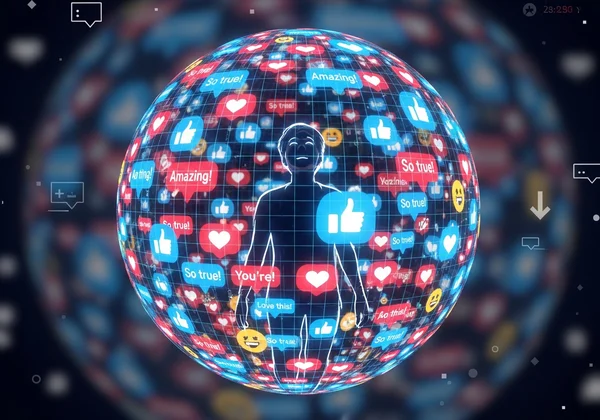
This digital bubble reinforces their distorted self-perception. In this "narcissistic validation loop," they are shielded from any feedback that might challenge their sense of superiority. It confirms their belief that they are always right, their opinions are facts, and their life is an object of universal admiration. This makes it increasingly difficult for them to develop self-awareness or empathy.
How Online Narcissism Tests Provide Self-Insight
If you recognize some of these behaviors in yourself or someone you know, what's the next step? An online narcissism test can be a powerful tool for gaining objective self-insight. It moves beyond speculating and offers a structured way to reflect on your attitudes and behaviors.
These tests are not meant to be a diagnosis. Instead, they are educational resources designed to help you explore your personality and gain clarity. By answering a series of carefully designed questions, you can see how your traits align with recognized behavioral patterns. If you're ready to learn more, you can start your test today.
Beyond the Like Count: Understanding Your Digital Behavioral Patterns
A test can help you connect the dots between your online actions and your underlying motivations. Does your happiness depend on the number of likes you get? Do you feel empty or angry when a post underperforms? A good assessment encourages you to look past surface metrics and understand the "why" behind your digital habits.
It provides a framework for self-reflection that is private and non-judgmental. The results can highlight tendencies you might not have been fully aware of, such as a high need for admiration or a pattern of social comparison. This awareness is the first and most crucial step toward meaningful personal growth and developing a healthier relationship with social media.
Translating Online Actions to Real-World Implications
Your behavior online is often a reflection of your behavior offline. A tendency to seek constant validation from strangers on the internet can impact your personal relationships. It might make it difficult to form deep connections based on mutual vulnerability and support.
A narcissism test helps reveal these connections. Understanding your digital patterns provides insight into how you interact with colleagues, friends, and family. These insights can lead to more meaningful relationships.
The Science Behind Narcissism Assessment: What These Tests Actually Measure
Reputable narcissism tests are typically based on established psychological concepts, such as the traits outlined in the Narcissistic Personality Inventory (NPI). They don't measure whether you are "good" or "bad." Instead, they assess where you might fall on a spectrum of traits.
These tests measure dimensions like entitlement, a sense of superiority, exhibitionism, and authority. The summary you receive helps you understand which of these traits might be more prominent in your personality. It's a confidential, data-driven way to gain perspective, moving away from self-judgment and toward objective self-understanding. To see how it works, you can try our free tool.
Your Digital Self-Awareness Journey: Next Steps for Understanding Narcissism
Understanding digital narcissism isn't about labeling anyone. Rather, it's about spotting patterns that quietly shape our well-being and relationships in today's hyper-connected world. We've seen how the need for validation, constant self-promotion, and curated realities manifest on social media, driven by deep psychological needs for attention and superiority.
The key takeaway is that awareness is power. By understanding these behaviors, you can start to build a healthier, more authentic relationship with social media and, more importantly, with yourself. The journey to self-awareness can feel overwhelming, but you don't have to take it alone.
Your digital life is an extension of your real life. Gaining insight into your online behaviors can unlock a deeper understanding of your overall personality. If you're curious about where you stand, the next step is simple. Explore your traits with a confidential and insightful online assessment. Start your free test now to gain clarity and begin your journey toward greater self-awareness.
Disclaimer
This article is for informational and educational purposes only. The test provided by Narcissismtest.net is not a diagnostic tool and does not replace a professional evaluation. If you have concerns about your mental health, please consult a qualified healthcare provider.
Frequently Asked Questions About Digital Narcissism Assessment
Can a test really tell if I'm a narcissist?
An online test cannot diagnose Narcissistic Personality Disorder (NPD), which requires a comprehensive evaluation by a mental health professional. However, a well-designed assessment can identify narcissistic traits and show you where you might fall on the narcissism spectrum. Think of it as an educational tool for self-reflection, not a clinical diagnosis.
What's the difference between self-confidence and narcissism on social media?
Self-confidence is rooted in a stable sense of self-worth. A confident person can share achievements without needing constant validation. Narcissism, on the other hand, is often rooted in deep insecurity and a fragile ego that requires continuous external praise. The key difference lies in the motivation: confident people share to connect, while those with narcissistic traits often share to prove their superiority.
Is using social media a lot a sign of narcissism?
Not necessarily. High usage can be for work, staying in touch with family, or pursuing a hobby. The sign of narcissism isn't the amount of time spent, but how it's spent. If your time online is focused on seeking admiration, managing a perfect image, and feeling superior to others, it may indicate narcissistic tendencies. A tool like an online narcissism test can help you explore these motivations more deeply.