Do Narcissists Love? Understanding Their Affection
Do narcissists love in the way most people mean love? If you’re stuck in a relationship that swings between intense highs and confusing lows, that question can feel urgent—and deeply personal. This article offers a clear, non-judgmental framework to help you make sense of what you’re seeing, without jumping to a diagnosis. We’ll explore what love can look like when narcissistic traits are involved, the behavioral patterns that often show up, and practical next steps for protecting your emotional well-being. If you want a structured way to sort your observations, you can also explore our narcissism test as a private self-reflection resource.

What Love Means to a Narcissist vs. Healthy Affection
To understand why people ask do narcissists love, it helps to clarify what love typically requires. For many people, healthy love is built on empathy, mutual respect, accountability, and a genuine desire for the other person’s well-being. When strong narcissistic traits are present, affection can still feel intense—but it may be driven by very different needs.
If you’re wondering do narcissists love, one practical way to think about it is this: the bond can be real in the moment, yet conditional and self-focused over time. That difference is what often creates the highs and lows pattern.
The Central Role of Narcissistic Supply
A narcissist’s emotional world often revolves around narcissistic supply—the admiration, attention, and validation they rely on to stabilize a fragile sense of self-worth. In this context, a partner may be treated less like an equal person and more like a key source of supply.
When you are admiring, compliant, and making them feel important, they may appear loving and attentive. When you set boundaries, express needs, or criticize them, the supply can feel threatened—and the affection may drop off abruptly.
Key Differences: A Comparison of Empathetic vs. Narcissistic Love
Seeing the contrast side-by-side can make the difference clearer. This isn’t about small disagreements; it’s about the purpose and structure of the relationship.
| Feature | Healthy, Empathetic Love | Narcissistic Love |
|---|---|---|
| Motivation | Mutual connection and well-being. | To secure narcissistic supply. |
| Empathy | Responding to your partner’s emotions with care and validation. | Limited; may dismiss or minimize your feelings. |
| Conflict | A chance to understand and repair. | A threat to ego, leading to blame, rage, or withdrawal. |
| Support | Present during hard times, without keeping score. | Often conditional; offered when it benefits status or control. |
7 Telltale Signs of Narcissistic Love in Action
If you keep asking do narcissists love, the clearest answers usually come from patterns—not promises. While any one behavior can appear in many relationships, narcissistic dynamics often show up as a consistent cycle that leaves you feeling confused, responsible, or never enough. In other words, how to tell if a narcissist loves you often comes down to observing repeated behaviors over time.
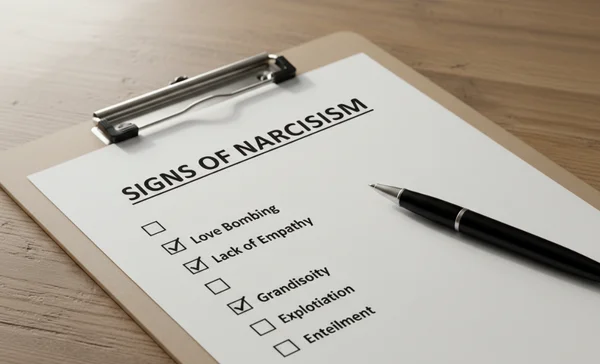
Sign 1: Intense and Overwhelming Love Bombing
Early on, the affection may feel like a fairytale—constant attention, compliments, and big gestures. However, love bombing is often about accelerating attachment and dependence, not building real intimacy. It can feel amazing at first, then suddenly fade.
Sign 2: The Idealize–Devalue–Discard Cycle
A common pattern is: idealize you, then criticize you, then withdraw or discard when you stop meeting their needs. This cycle can keep you chasing the good version of them. Over time, it often erodes self-trust.
Sign 3: A Profound Lack of Genuine Empathy
They may understand you’re upset on an intellectual level, yet struggle to emotionally feel with you. As a result, your pain can be dismissed, minimized, or turned into a problem you caused. This often leaves you feeling alone in the relationship.
Sign 4: Affection That Feels Conditional
Their warmth may rise when you agree, flatter, or comply—and drop when you set boundaries or disagree. That can make you feel like you have to perform to earn kindness. Over time, love becomes something you manage, not something you receive.
Sign 5: Control Disguised as Care
They may frame control as protection: monitoring your friendships, appearance, schedule, or decisions. On the surface it can look like devotion. Underneath, it often serves insecurity and dominance.
Sign 6: Accountability Avoidance
When conflict happens, they may deny, deflect, blame-shift, or rewrite events. Even when they apologize, it may be vague or strategic rather than accountable. This pattern can make you doubt your memory and judgment.
Sign 7: You Feel Drained, Not Safe
A relationship can look loving on paper yet feel unsafe inside your body—tense, anxious, hypervigilant. If affection comes with fear of punishment or withdrawal, it’s a signal worth taking seriously. This is often why do narcissists love becomes a survival question.
How Narcissistic Love Manifests in Key Relationships
The question do narcissists love also shows up differently depending on the relationship. Romantic partners often experience control and conditional validation, while children may experience enmeshment and performance-based approval. The pattern isn’t just emotional—it can shape identity, boundaries, and long-term self-esteem.
In Romantic Partnerships: Love as Control and Admiration
In a romantic relationship, a narcissistic partner may treat you like an accessory—someone meant to reflect well on them. Your role can become support their image rather than share a life. As a result, they may pressure you to prioritize them, prove loyalty repeatedly, or accept unequal rules.
If you’re asking do narcissists love their partner, it may help to ask a parallel question: does this relationship allow you to be a full person with needs, boundaries, and independent choices?
As a Parent: Seeing Children as an Extension of Themselves
The question do narcissists love their children can be especially painful. Some narcissistic parents feel a strong attachment, but it can be rooted in seeing the child as an extension of themselves. The child’s achievements may be treated as proof of the parent’s worth, and the child’s emotions may be ignored if they threaten the parent’s image.
In that environment, a child may learn that love equals performance—rather than safety, comfort, and acceptance.
How to Gain Clarity When You Feel Confused and Unsure
Reading about these patterns can stir up sadness, anger, relief, or self-doubt—sometimes all at once. That reaction is normal. When a relationship has trained you to question your reality, clarity often comes from structure, not willpower.

Why Structured Self-Reflection is a Powerful First Step
When your instincts have been undermined for a long time, just trust your gut can feel impossible. Structured self-reflection helps you sort events, patterns, and feelings in a grounded way. It’s not about diagnosing someone; it’s about understanding your experience and deciding what you need next.
A Gentle Tool to Organize Your Observations
If you’d like a private way to organize what you’re noticing, you can try our narcissism test as an educational, self-reflection resource. It’s designed to help you think through common patterns and summarize themes you may want to explore further.
Disclaimer: This resource is for educational and self-reflection purposes only and is not a substitute for professional diagnosis or clinical advice.
Is There Hope for Change, and What's Next for You?
If you’re still asking do narcissists love, it’s natural to also wonder whether they can change. Change is possible for some people, but lasting change usually requires insight, accountability, and long-term professional support—and it must be driven by their own motivation.
What you can control is your next step. Here’s a simple, practical checklist you can use this week:
- Name the pattern: Write down 2–3 repeated behaviors (not labels).
- Track the impact: Note how you feel afterward (anxious, small, confused, numb).
- Set one clear boundary: Keep it specific (what you will/won’t engage with).
- Reconnect with support: Talk to a trusted friend, family member, or therapist.
- Plan for safety: If conflict escalates or you feel unsafe, consider a safety plan and professional support.
If you consistently feel drained, anxious, or devalued, it may be time to seek help from a therapist or counselor who understands relationship dynamics and emotional abuse. Support can help you rebuild self-trust and clarify choices without pressure.
Conclusion: Making Sense of Do Narcissists Love?
So—do narcissists love? In many cases, what looks like love may function more like conditional attachment: intense when their needs are met, withdrawn when their ego feels threatened. You don’t need a clinical label to take your experience seriously. If patterns leave you confused, diminished, or unsafe, that information matters.
If you want a structured way to reflect before making big decisions, you can learn more through our narcissism test and use the results as a starting point for journaling, boundary-setting, or a conversation with a qualified professional.
Frequently Asked Questions
Do narcissists truly love themselves?
Not necessarily. Many narcissistic people project confidence, but that can mask insecurity and shame. Instead of steady self-worth, they may rely on external validation to feel okay—especially during stress or criticism.
Is a narcissist aware that their way of loving is hurtful to others?
They may notice that their actions cause reactions (sadness, anger, distance). Sometimes they use those reactions to regain control. However, limited empathy can make it difficult for them to fully grasp the emotional impact, and they may justify behavior or blame you.
Do covert narcissists love differently than overt narcissists?
The underlying need for validation (supply) can be similar, but the expression may look different. Overt narcissism often appears loud and dominant, while covert narcissism can look more victim-focused, using guilt, withdrawal, or subtle manipulation to secure attention.
What happens when a narcissist is no longer receiving admiration from their partner?
When admiration drops, their behavior may intensify: more criticism, more control, or more withdrawal. In some cases, they may seek validation elsewhere (including emotional or physical affairs) or move toward a discard phase while blaming you for the relationship’s problems.
What is the difference between recognizing relationship patterns and a formal diagnosis?
Recognizing patterns is for personal understanding, safety, and decision-making. A formal diagnosis of Narcissistic Personality Disorder (NPD) can only be made by a qualified clinician (such as a psychiatrist or psychologist) after a thorough evaluation.